1940s Women's Style Glamour Revival
- 1.
why 1940s women’s style still turns heads like a Spitfire in full dive
- 2.
from rationing to runway: how fabric shortages shaped fierce silhouettes
- 3.
rosie the riveter wasn’t just a poster—she was a whole mood (and wardrobe)
- 4.
make-do and mend: the original upcycling movement (no influencers required)
- 5.
victory rolls, snoods, and the art of keeping hair out of the lathe
- 6.
lips like a warning siren: why red lipstick was wartime armour
- 7.
the utility dress: Britain’s answer to haute couture (with pockets)
- 8.
evening glamour: when blackout curtains became ballgowns
- 9.
footwear: clompy, clever, and weirdly covetable today
- 10.
how to channel 1940s women’s style today—without time-travelling (or breaking the bank)
Table of Contents
1940s women's style
why 1940s women’s style still turns heads like a Spitfire in full dive
Ever rummaged through your nan’s attic, pulled out a hatbox with a feather sticking out like a startled pigeon, and thought—*blimey, she was basically a wartime Bond girl*? That’s the magic of 1940s women’s style: utility meets Hollywood glamour, ration books and red lipstick, austerity and allure—all stitched together with grit and a *very* sharp pair of scissors. We didn’t just *dress* in the ’40s—we *performed* resilience. Every rolled hem, every repurposed curtain, every snood tied just so? A quiet act of defiance. The 1940s women’s style wasn’t fashion—it was *fortitude in frills*. And honestly? It’s having a proper renaissance. TikTok’s awash with Victory Rolls tutorials, vintage fairs sell out faster than a NAAFI tea urn—and suddenly, your local pub quiz night’s got three Rosie the Riveters arguing over who *actually* brought the spanner.
from rationing to runway: how fabric shortages shaped fierce silhouettes
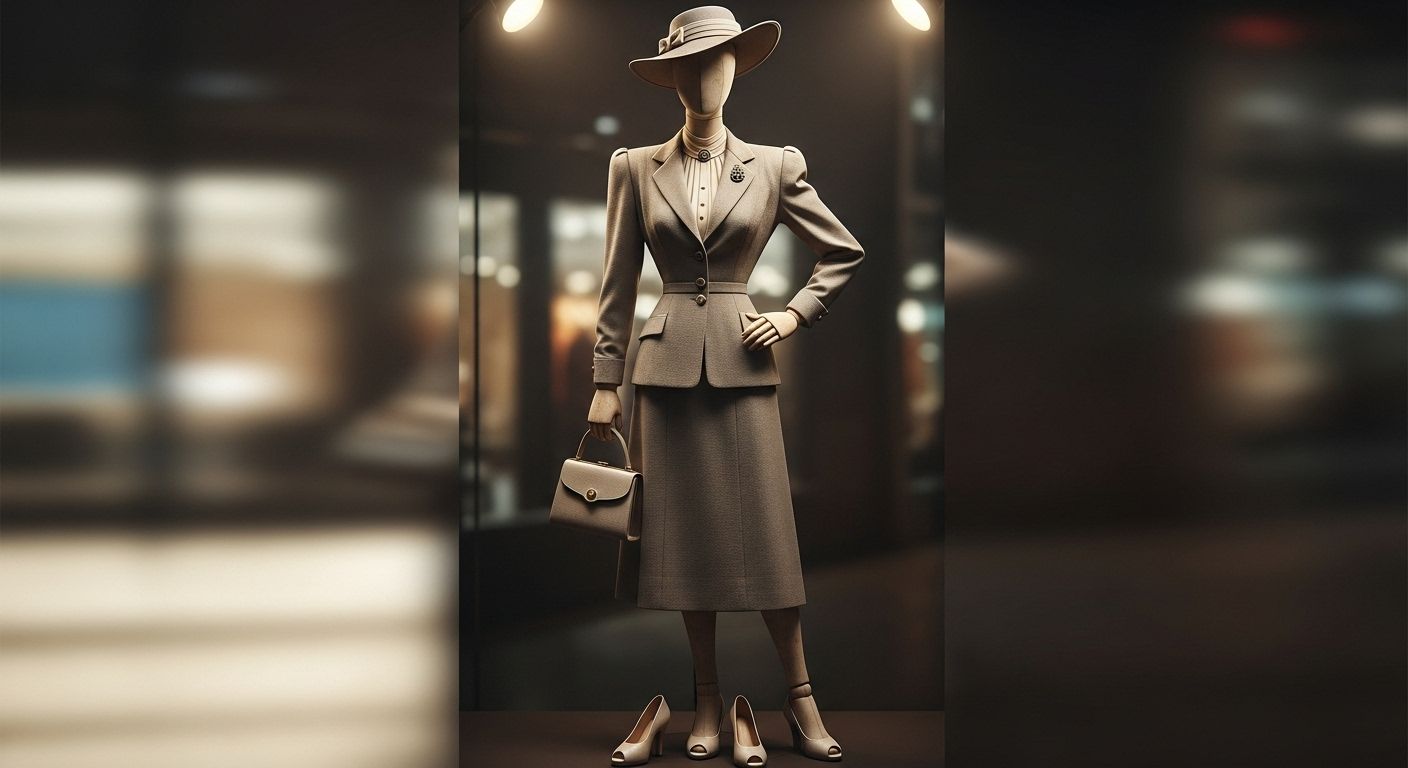
Let’s talk cloth—or rather, the *lack* of it. In 1941, the Board of Trade dropped **CC41** (Civilian Clothing 1941), aka “the austerity mark”: a little label that meant your frock met strict rules—no more than 2.5 yards of fabric, max 2 pockets, *and* only three buttons. No pleats? No problem. Women got *creative*: men’s suits became chic jackets, blackout curtains birthed ballgowns (true story—Vivien Leigh’s *Gone With the Wind* gown was allegedly made from drapes *before* the film even aired), and parachute silk? Pure luxury lingerie. The 1940s women’s style silhouette—nipped waist, padded shoulders, knee-length skirt—wasn’t just chic; it was *efficient*. Like a Morris Minor: compact, reliable, and surprisingly fast when needed.
rosie the riveter wasn’t just a poster—she was a whole mood (and wardrobe)
Picture this: hair in a turban, overalls cinched at the waist with a wide belt, sleeves rolled to the elbow—and* a pair of brogues polished to mirror shine. That’s not “casual Friday.” That’s Rosie. The 1940s women’s style for working women blended practicality with panache. Factory floors demanded safety—no loose scarves, no trailing hems—so fashion *adapted*, not surrendered. Overalls came in navy, brown, even *green tweed* (yes, really). Blouses? Crisp, collarless, with subtle pintucks. And belts? Non-negotiable. They cinched not just fabric—but *purpose*. As one munitions worker put it: “If me shoulders look broad enough to carry the war effort, and me waist says I’ve still got time for a dance after shift—then I’m dressed.” That’s the heart of 1940s women’s style: duty and desire, side by side.
make-do and mend: the original upcycling movement (no influencers required)
Before “sustainable fashion” was a hashtag, it was a *necessity*. “Make Do and Mend” wasn’t a boutique name—it was a government pamphlet *everyone* owned. Got a tear? Darn it with contrasting thread—*turn it into embroidery*. Skirt too long? Hem it, then use the offcut for a hairband. Stockings run? Draw a seam up the back with eyebrow pencil (a trick so widespread, Max Factor released *“Liquid Stocking”* in 1947). Here’s a snippet from the official 1943 guide:
“A well-mended garment should not look shabby—rather, it should show the care and pride of its wearer.”
That ethos—*pride in preservation*—is why 1940s women’s style feels so *authentic* today. No fast fashion, no landfill guilt—just cleverness, needle, and thread. And let’s be real: nothing says “I’ve got my sh*t together” like a perfectly invisibly mended elbow.
victory rolls, snoods, and the art of keeping hair out of the lathe
Long hair + factory machinery = disaster. So women didn’t just *style* their hair—they *engineered* it. The 1940s women’s style coiffure was equal parts aerodynamics and artistry. Victory Rolls? Two barrel curls pinned high—inspired by RAF fighter spins (and, allegedly, by Veronica Lake before she *had* to cut her hair for safety). Snoods? Knitted or netted pouches that held hair *securely*—but looked like you’d just stepped out of *Casablanca*. And turbans? Not costume—they were *practical*: covered rollers, hid greasy roots on wash-day, and added 3 inches of height (psychological advantage: *massive*). Below, a visual cheat sheet of the era’s most iconic looks:
lips like a warning siren: why red lipstick was wartime armour
Here’s a fact that’ll stop you mid-sip of tea: the British government *refused* to ration lipstick. Why? Because morale wasn’t just about food and fuel—it was about *face*. A bold red—Tangee’s “Victory Red”, Elizabeth Arden’s “Montezuma Red”, or (our personal fave) Helena Rubinstein’s “Regimental Red”—wasn’t vanity. It was *vital*. Women applied it before air raids, over gas masks, even in bomb shelters. As cosmetics ads declared: “Keep up your morale—keep up your colour!” Nail polish? Same deal—though many women painted only the *top half* of nails (saves polish, looks chic from above). The 1940s women’s style beauty mantra? *If you can’t stop the war, at least stop looking like it’s won.*
the utility dress: Britain’s answer to haute couture (with pockets)
Enter the **Utility Dress**—designed by the likes of Hardy Amies and Digby Morton, approved by the Board of Trade, and sold nationwide for £2 10s (≈ £120 today). No frills? Fine. But *perfect* proportions: natural waistline, gently flared skirt (to 18½ inches—no more, no less), and *always* with side pockets. (Yes—*pockets*. Take notes, modern fashion.) Below, a snapshot of 1942 Utility specs:
| Feature | Max Allowance | Why It Mattered |
|---|---|---|
| Fabric | 2.5 yards (wool) | Enough for structure, not waste |
| Skirt length | 21 inches from waist | Knee-grazing—practical for cycling, dancing, ducking |
| Shoulder pads | Yes (removable) | Power silhouette—without extra fabric |
| Pockets | Up to 2 | For bus fare, love letters, and emergency mints |
This wasn’t “less.” It was *more*—more intention, more integrity. The 1940s women’s style dress proved you could be elegant *and* efficient, chic *and* conscientious.
evening glamour: when blackout curtains became ballgowns
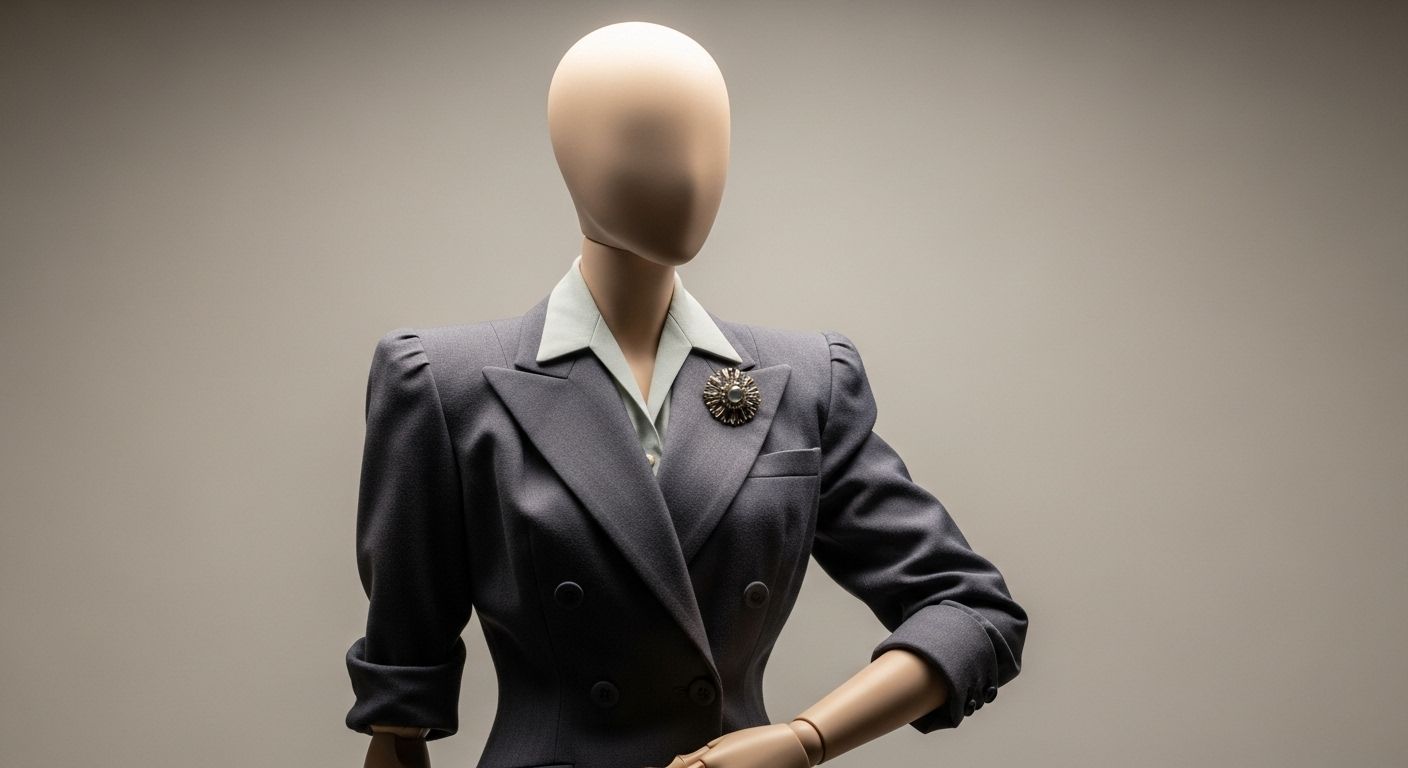
Don’t let the rationing fool you—when the sun went down (and the blackout blinds came up), *darlings*, we *sparkled*. Evening 1940s women’s style leaned into Hollywood: bias-cut satin (if you could scrounge it), faux-fur stoles (rabbit, dyed to look like mink), and gloves—*always* gloves (elbow-length for opera, wrist for the local Palais). Necklines dipped, backs plunged—but modesty panels kept things *just* respectable. Accessories? Bakelite bangles, rhinestone brooches (often repurposed from pre-war pieces), and *one* statement earring if you’d lost its twin in an air raid. As Vogue London wrote in ’43: “Elegance is not what you wear—it’s how you wear your courage.” And sister, we wore it *well*.
footwear: clompy, clever, and weirdly covetable today
Leather? Reserved for boots, belts, and RAF pilots. So women turned to *utility shoes*: cork wedge soles (lightweight, durable), open-toe “spectator” pumps (two-tone—smart *and* scuff-hiding), and the legendary **Wren’s shoe**—low-heeled, lace-up, with a *rubber* sole (imported from the US via Lend-Lease). No heels over 2 inches—not just regulation, but *sense* (cobblestones don’t forgive stilettos). And let’s not forget the **ATS boot**: ankle-height, brown leather, with a *single* strap—worn by Auxiliary Territorial Service lasses and *stolen* by civilians the second they hit the surplus shops. The 1940s women’s style footwear rule? *If it won’t let you run to the shelter, cycle to work, and still tap-dance at the hop—it’s not worth lacing up.*
how to channel 1940s women’s style today—without time-travelling (or breaking the bank)
Right—fancy living the dream? You don’t need a vintage shop in Soho (though, fair play if you’ve got one). Here’s our no-nonsense checklist for nailing 1940s women’s style in 2025:
- Shoulders: Pad them—even a folded handkerchief in the seam works.
- Waist: Belt *everything*. Cardigan? Belt it. Dress? Belt it tighter.
- Hair: Victory Rolls take 12 minutes (YouTube tutorial + 3 bobby pins).
- Lips: Go full red—matte, not glossy. Bonus points for a *sharp* cupid’s bow.
- Attitude: Stand tall. Chin up. Smile like you’ve just heard the war’s *nearly* over.
And if you’re after deeper cuts—like how to spot authentic CC41 labels, or why seamed stockings are making a comeback—pop over to The Great War Archive, browse our curated History vault, or dive into our full visual guide: 1900s clothing styles vintage elegance. Trust us—it’s better than a cuppa with ration biscuits.
Frequently Asked Questions
What to wear to a 1940's themed party?
Go for the trifecta: a knee-length, A-line dress with padded shoulders and a nipped waist (bonus if it’s floral or polka-dot), seamed stockings (draw the line with eyeliner if needed), and a hair turban or Victory Rolls. Add red lipstick, a brooch at the collar, and low wedge heels. The 1940s women’s style party look isn’t about perfection—it’s about *personality*. Bring a handbag with a mirror inside (for touch-ups and air-raid readiness).
How to make an outfit look 1940s?
Three words: structure, silhouette, shine. Tuck in your blouse, add a wide belt, roll sleeves to the elbow, and pin a scarf to your lapel. Swap modern jeans for high-waisted wide-leg trousers (tucked into ankle boots). The 1940s women’s style is all about *intentional* dressing—nothing slouchy, nothing accidental. Even a simple shirt and skirt combo screams ’40s if your waist’s cinched and your hair’s coiled like a spring-loaded secret.
What was the most iconic women's hairstyle in the 1940s?
Undeniably, the **Victory Roll**. Two smooth, barrel-shaped curls swept up from the temples and pinned high—symbolising both aeroplane manoeuvres and feminine resilience. Paired with a snood or headscarf for day, or left bare with a rhinestone clip for evening, it defined the 1940s women’s style aesthetic. Veronica Lake’s peek-a-boo fringe was iconic too—until she cut it for factory safety, sparking a national “hair-up” campaign.
How to dress like a 1940s femme fatale?
Think *Laura* (1944), not *Rosie*. Bias-cut satin dress in black or deep emerald, sleeveless with a sweetheart neckline. Elbow-length gloves. Hair in a low chignon—*one* curl escaping near the ear. Smoky eyes, arched brows, and lips in “blood red.” Add a single strand of pearls (real or Bakelite), a cigarette holder (empty, obviously), and a look that says, *“I know who killed him—I’m just deciding whether to tell you.”* That’s the dark glamour edge of 1940s women’s style—where elegance had teeth.
References
- https://www.vam.ac.uk/articles/utility-clothing-wwii
- https://www.iwm.org.uk/history/how-women-coped-with-clothing-rationing-in-the-second-world-war
- https://www.historyextra.com/period/second-world-war/1940s-fashion-women-clothes-ww2-make-do-mend
- https://www.bbc.co.uk/history/ww2peopleswar/stories/70/a3677370.shtml